
Sample Art Report Preview
This preview keeps evidence fields visible, separates observations from interpretation, and shows how limits are handled before a collector asks for review.
file: VEY-SAMPLE-001
route: /sample-art-report/
state: public sample
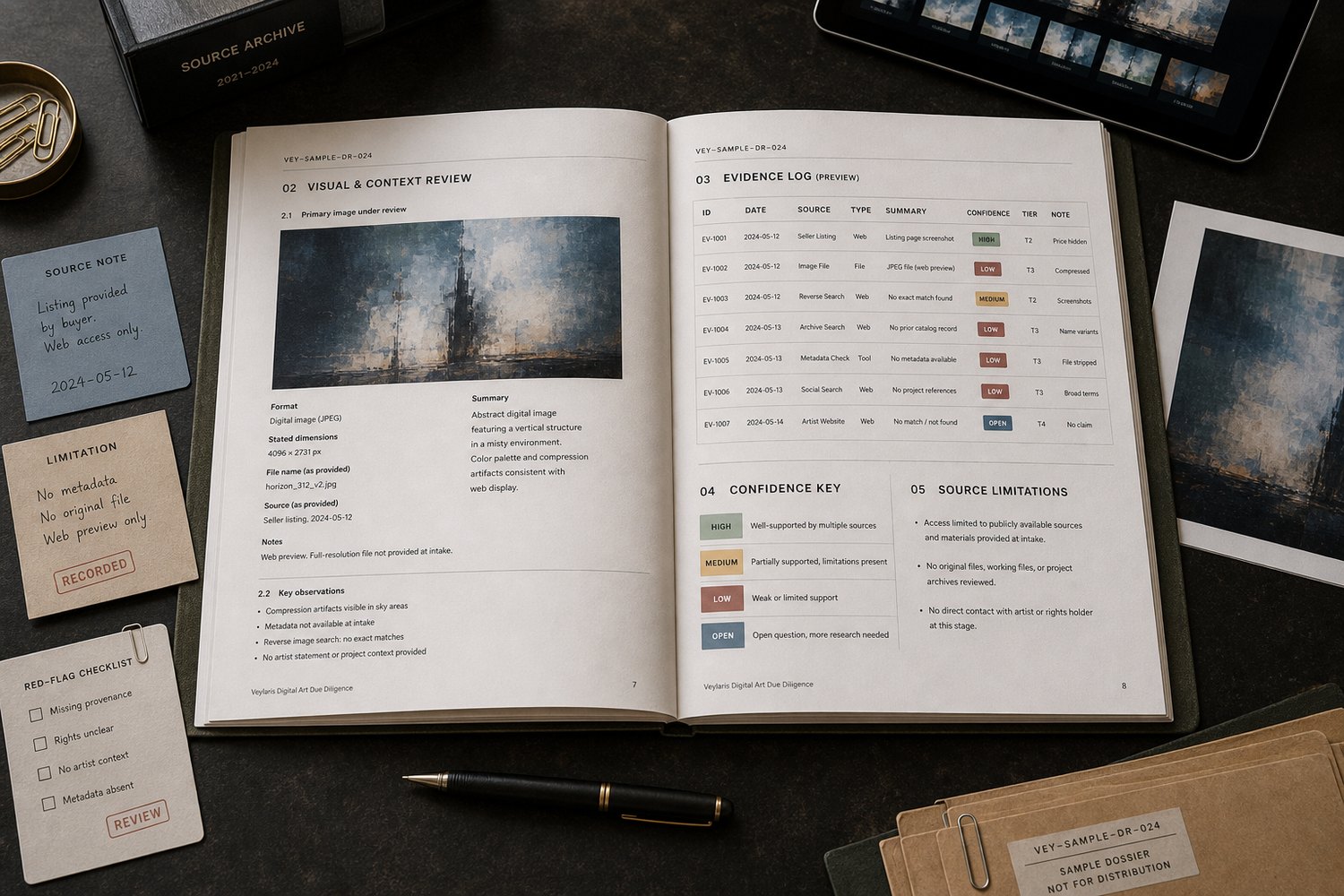
Source ledger
Limit notes
Confidence labels, not verdicts
Labels help organize the report. They are not a value, title, rights, security, tax, or purchase-suitability conclusion.
Ask whether this sample report route fits your source question.
Use the contact route or plain email after reviewing this proof page. Keep private files out of the first message; start with the artwork context, source question, and what you want checked.
Public links first
Manual review first
Veylaris is an email-first research desk. Use the contact route for scope questions; keep sensitive files out of the first message.
What the sample fields keep visible
Marketplace text
Captured as a claim source, not as proof that the statement is complete.
Metadata records
Stored with access notes, persistence questions, and unresolved file-context fields.
Rights statements
Separated from legal interpretation and routed out when ownership or license questions matter.
Screenshots
Useful for a dated record, but not a substitute for primary documentation.
What a Veylaris report page is designed to make visible
Compare the sample format with the current offer.
The homepage now shows the available first-review email path plus the preview-only kit states. This route gives buyers a concrete look at the report structure before they return to the offer.
Research structure without outcome promises.
Veylaris organizes source material, uncertainty, open questions, and professional-routing needs. This sample page does not tell a collector what to do and does not settle value, title, rights, tax, security, preservation, or purchase-suitability questions.
Direct email route or file intake
Manual review first path
Research support only
Organized evidence
What a useful report makes easier to inspect.
The sample report is strongest when the visitor can see the desired end state: source material grouped into a reviewable file with limitations and questions kept visible.

Rows, cards, and report pages help keep visible evidence separate from interpretation and professional-review questions.

The report format should show how sources are handled, not ask the collector to trust a hidden process.